Solutions
Accredited solutions for every education provider
From enterprise AI reskilling to university partnerships and on-campus degrees, Woolf turns learning into globally recognized, portable academic credit.
Solution 01
Enterprise AI reskilling
Turn workforce AI transformation into accredited, portable credit. Woolf transforms enterprise reskilling into real degrees and an evidence record that makes capability defensible.
Accredited credit for AI upskilling at enterprise scale
Forward-deployed agents that learn each institution and call regulated workflows in real time
Talent Intelligence profiles that turn completion into workforce data
Solution 02
With online elective courses from Saïd Business School, University of Oxford
Offer top-tier online courses created by global experts. Elevate your curriculum through Oxford Saïd certificate courses with ECTS credits from Woolf, applied directly on your students degree transcript.
Premium coursework from leading global institutions
ECTS credits issued directly on Woolf transcripts
Quality assurance maintained at the highest standards


Solution 03
Start online, finish on campus
Give students the flexibility of online learning and the experience of campus life — one accredited degree, two phases, credit that travels.
Begin an accredited degree online from anywhere
Complete it in person at a U.S. campus center
International mobility across major qualification frameworks
Solution 04
Forward-deployed agents
Intelligent operators that sit with each customer, learn their institution, and call regulated academic workflows in real time to solve problems on their behalf.
An agent that already knows the platform and learns each institution
Composes recipes of regulated workflows — but can never modify them
Every interaction enriches the customer digital twin and compounds the platform


Solution 05
Proven results, real case studies
See how bootcamps, business schools, and training organizations increased enrollment and revenue by offering accredited degrees through Woolf.
Bootcamps elevated into globally recognized institutions
Measurable uplift in enrollment, retention, and revenue
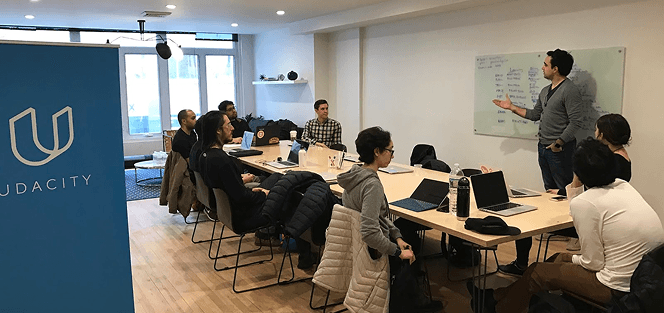
Real outcomes from colleges like Scaler, Oneday, and Udacity
Get started
Find the right solution for your organization.
Talk to our team about how Woolf can wrap your programs in accredited, globally recognized degrees.